
Innovation launched it. Culture sustained it. Inaction ended it.
From the beginning, Orkut aligned with what would today be called a digital marketing action plan, identifying a target audience, providing community value, and fostering engagement. The platform’s clean design and community driven interface encouraged people to connect based on shared interests. In just four months, over 50,000 communities had formed, and by the end of its first year, that number skyrocketed to 1.5 million (Spertus et al., 2005).
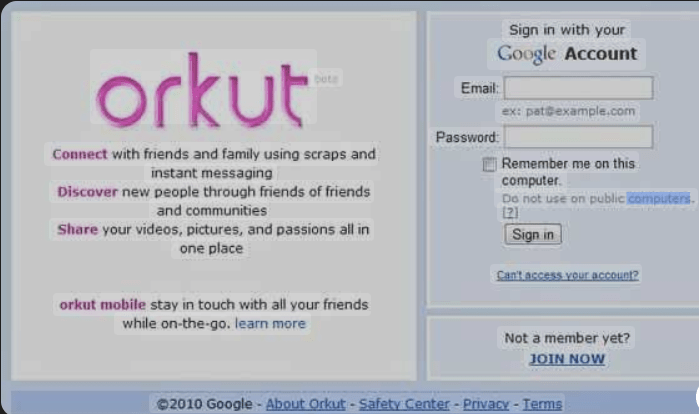
Orkut’s early success lay in understanding user psychology. It offered connection, recognition, and exclusivity, the three drivers that modern marketers still rely on. The invite only membership created a sense of prestige, while user generated communities allowed people to find “their people” online (Recuero, 2011). Brands could subtly enter these spaces through recommendations and discussions rather than intrusive ads. This organic, word of mouth approach aligned perfectly with the principles of inbound marketing, where the goal is to attract and delight customers rather than push to sell (Halligan & Shah, 2014).
However, Orkut eventually fell short in its ability to adapt. Its technology didn’t evolve quickly enough to meet the expectations of an increasingly mobile and multimedia-driven audience. Users began migrating to Facebook, which offered easier photo sharing, faster load times, and integrated multimedia tools (Translate Media, 2015). Essentially, Orkut failed to scale its user experience alongside technological innovation, something no modern marketer can afford to overlook.
Communities and the Changing Role of the Digital Consumer
Orkut’s community structure was one of its strongest assets. Each group acted as a micro community, where users were not passive consumers but active co-creators of content and culture. This shift reflects what Berthon et al. (2012) describe as “the co-creation of value,” where digital consumers no longer just receive messages, they shape them.
Unlike traditional diffusion strategies that push messages outward, Orkut encouraged a bottom up model. Users formed interest based communities, everything from college networks to hobby groups, where discussions and recommendations held more weight than corporate ads. This participatory culture made users feel part of something bigger than themselves.
Today, that model is everywhere. Facebook Groups, Reddit threads, and Discord servers all build on the foundation Orkut laid, empowering users to be both the audience and the storytellers. What Orkut did well was showing that authentic engagement beats mass broadcasting every time.
The Cultural Connection: Why Brazil Fell in Love with Orkut
To understand Orkut’s success in Brazil, one must understand Brazilian culture. Social connection, warmth, and community are deeply ingrained in Brazilian life. Holmes (2013) noted that Brazil has one of the world’s most engaged online populations where mobile phones outnumber people, and social media is the preferred communication tool. The country’s ban on outdoor advertising also pushed brands to go digital, making social media a prime space for engagement.
Orkut fit seamlessly into this environment. It provided a digital space for connection and expression, aligning perfectly with the country’s cultural values of friendship and sociability. However, when the platform failed to evolve, especially with limitations in multimedia sharing and slow loading times, it lost cultural relevance. Brazilians quickly transitioned to platforms like Facebook, which offered more dynamic, interactive experiences (Feigenbaum, 2014).
For brands operating in markets like Brazil, the takeaway is clear: culture drives engagement. Digital strategies that overlook local habits, humor, and communication styles risk alienating audiences. Brands that thrive on social media in culturally rich markets often blend storytelling with cultural pride, something Orkut once did naturally.
Lessons for Today’s Marketers
So, what can today’s social media strategists learn from Orkut’s journey?
- Prioritize user experience. Technology must evolve alongside user expectations. Clunky or outdated interfaces are a fast track to irrelevance.
- Build for community, not just communication. People crave connection. Brands should facilitate genuine dialogue rather than rely solely on broadcast messaging.
- Stay culturally agile. Successful platforms and brands localize content, tone, and functionality to align with cultural norms and user lifestyles.
- Leverage data, but stay human. Orkut thrived because it understood emotions—belonging, trust, curiosity. Those values remain the backbone of social engagement.
Ultimately, Orkut’s story is one of innovation, community, and missed opportunity. It taught marketers that even the most successful platforms can fade if they stop listening to their users. As the digital landscape continues to evolve, Orkut’s rise and fall remain a timeless reminder: social media success isn’t about being everywhere, it’s about being meaningful where it matters most.

 Becky on Brand
Leave a comment