
Disrupting retail through clarity, cause, and clever social marketing.
“We believe buying glasses should be easy, fun, and feel good.”
-Warby Parker
Let us be honest, shopping for glasses used to be a real hassle. Overpriced
frames, extended appointments, and that awkward moment when you are trying
on glasses under fluorescent lights while someone waits for you to decide.
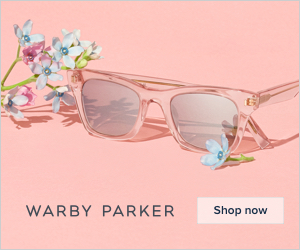
Then Warby Parker entered the chat—and everything changed.
In 2010, four students from the Wharton School had a vision: to make stylish
eyewear affordable and convenient, while building a brand people wanted to
engage with. What followed was more than a business—it was a movement.
Breaking the Mold: A New Way to Buy Eyewear
In a market long dominated by overpriced lenses and rigid buying processes, Warby
Parker saw an opportunity—not just to sell glasses, but to rewrite the retail script
entirely. Since launching in 2010, the company has not only challenged industry giants
but also used social media marketing as its lens to connect with customers in new and
meaningful ways.
So, what can we learn from Warby Parker? Their model shows how brands today can
use tech and purpose not just to sell but to connect truly.
Warby Parker began as a response to an outdated and expensive eyeglass industry.
Founders Neil Blumenthal and his classmates from Wharton understood a fundamental
pain point: consumers wanted affordable, stylish eyewear without the hassle of in-
person appointments or showroom visits (Warby Parker, 2015). By shifting sales online
and designing frames in-house, Warby Parker offered fashion-forward glasses at a
fraction of the cost—without sacrificing quality.
The Home Try-On Campaign: UGC That Works
Warby Parker’s marketing team knew that the internet alone was not enough. They
needed trust, visibility, and engagement. Their Home Try-On Campaign addressed this
brilliantly: customers could order five frames to test out at home, share photos online,
and return the ones they did not want—for free.
Real People, Real Glasses. Real Trust.
This campaign was not just an innovative business model—it was a social experience.
Warby Parker encouraged customers to post selfies in their try-on frames using
hashtags like #WarbyHomeTryOn on Instagram, Facebook, and Twitter. This user-
generated content (UGC) not only promoted the brand but also provided potential
buyers with real-world examples of the glasses’ appearance on actual people, rather
than just models or stock images.
According to Shandrow (2013), customers who posted their try-on photos were twice as
likely to make a purchase, proving the powerful influence of peer validation and visual
storytelling.
Two-Way Conversations, Not Just Ads
Unlike traditional advertising, which follows a linear “brand-to-consumer” model, Warby
Parker’s use of social media creates two-way conversations.
Their team actively responds to customer questions, comments, and even
jokes—turning digital interactions into genuine customer service. On Twitter, they
provide frame advice. On Instagram, they reply to comments with style suggestions. On
YouTube, they share instructional videos and invite fans to post their own reviews
(Tobin, 2013).
This approach builds emotional engagement, not just awareness. Customers feel seen,
heard, and valued, qualities that traditional advertising can rarely replicate.
Dissonance, Eliminated
Let us be honest, buying glasses online can feel risky, right? Warby Parker knew that,
and they used social media to address customer concerns head-on. By letting real
people showcase their try-on experience and providing a risk-free return process, they
offered proof and peace of mind.
Key dissonance-reducing elements include:
Social proof: UGC shows real people loving the product
Risk reversal: Free shipping, free returns
Expert content: Advice from stylists and opticians across social platforms
As Kotler and Armstrong (2021) emphasize, effective marketers reduce buyer
uncertainty by aligning brand communication with customer expectations—and Warby
Parker nails this.
Purpose with Vision: Buy a Pair, Give a Pair
Beyond clever sales tactics, Warby Parker also leans into purpose-driven marketing.
Their “Buy a Pair, Give a Pair” initiative donates a pair of glasses to someone in need
for every purchase made. Over 500,000 pairs have been donated, thanks to their
partnership with VisionSpring (Warby Parker, 2015).
This socially conscious strategy resonates with Millennial and Gen Z audiences, who
prefer to support brands that make a difference. It also gives customers an “alternative
narrative”—one they are proud to share with their social circles.
When consumers feel that their purchases reflect their values, they become brand
advocates, not just buyers.
Lessons from Warby Parker
Warby Parker is more than an eyeglass retailer. It is a masterclass in:
Using social proof to build trust
Turning UGC into a conversion
Leveraging social media as customer service
Embedding purpose into every transaction
What is your take? Have you tried Warby Parker’s home try-on? Would you trust UGC
when making a buying decision? Drop a comment.
Links:
https://www.entrepreneur.com/article/225369

 Becky on Brand
Leave a comment